Call us
(505) 420-6002
If you are upgrading a garage floor, two options you are likely to come across are epoxy flooring and grind and seal concrete. Both can transform an ordinary concrete garage slab into a cleaner, more attractive, and easier-to-maintain surface. However, they accomplish that goal in very different ways.
So, which one should you choose?
For most homeowners, the epoxy vs grind and seal garage decision comes down to appearance, how the garage will be used, maintenance expectations, the condition of the concrete, and budget. Epoxy creates a coating over the concrete and offers extensive color and decorative options. Grind and seal exposes and enhances the actual concrete before protecting it with a clear sealer.
Neither option is automatically better for every garage. This guide explains the differences so Albuquerque homeowners can make a more informed decision about their garage floors.
Quick Answer: Epoxy covers the concrete with a resin-based coating, while grind and seal mechanically grinds the existing slab and protects the exposed concrete with a topical sealer.
That distinction affects almost everything else about the finished floor.
With an epoxy system, the appearance primarily comes from the coating. Depending on the system, installers can add solid colors, decorative flakes, metallic effects, and other design elements.
With grind and seal, the concrete itself becomes the finished floor. Grinding removes surface imperfections and exposes varying amounts of the concrete beneath. A clear or tinted sealer is then applied for protection.
Think of it this way:
Epoxy = coating the concrete.
Grind and seal = enhancing the concrete.
Both can be excellent garage flooring systems, but they create very different looks.
An epoxy garage floor uses a resin-based flooring system installed over prepared concrete.
Surface preparation is one of the most important parts of the process. The slab generally needs to be mechanically prepared so the coating can properly bond to the concrete.
Cracks and other areas of concern may also need to be addressed before the coating is installed.
Depending on the flooring system, an epoxy garage floor can include a base coat, decorative elements, and a protective topcoat.
The result is a floor that can look dramatically different from the original concrete.
Customization is one of epoxy's biggest advantages.
Homeowners can choose from options such as:
Decorative flakes are particularly popular in garages because they create visual texture and help disguise minor dirt and everyday wear.
If your goal is to make the garage feel like a finished extension of your home, epoxy can be a strong option.
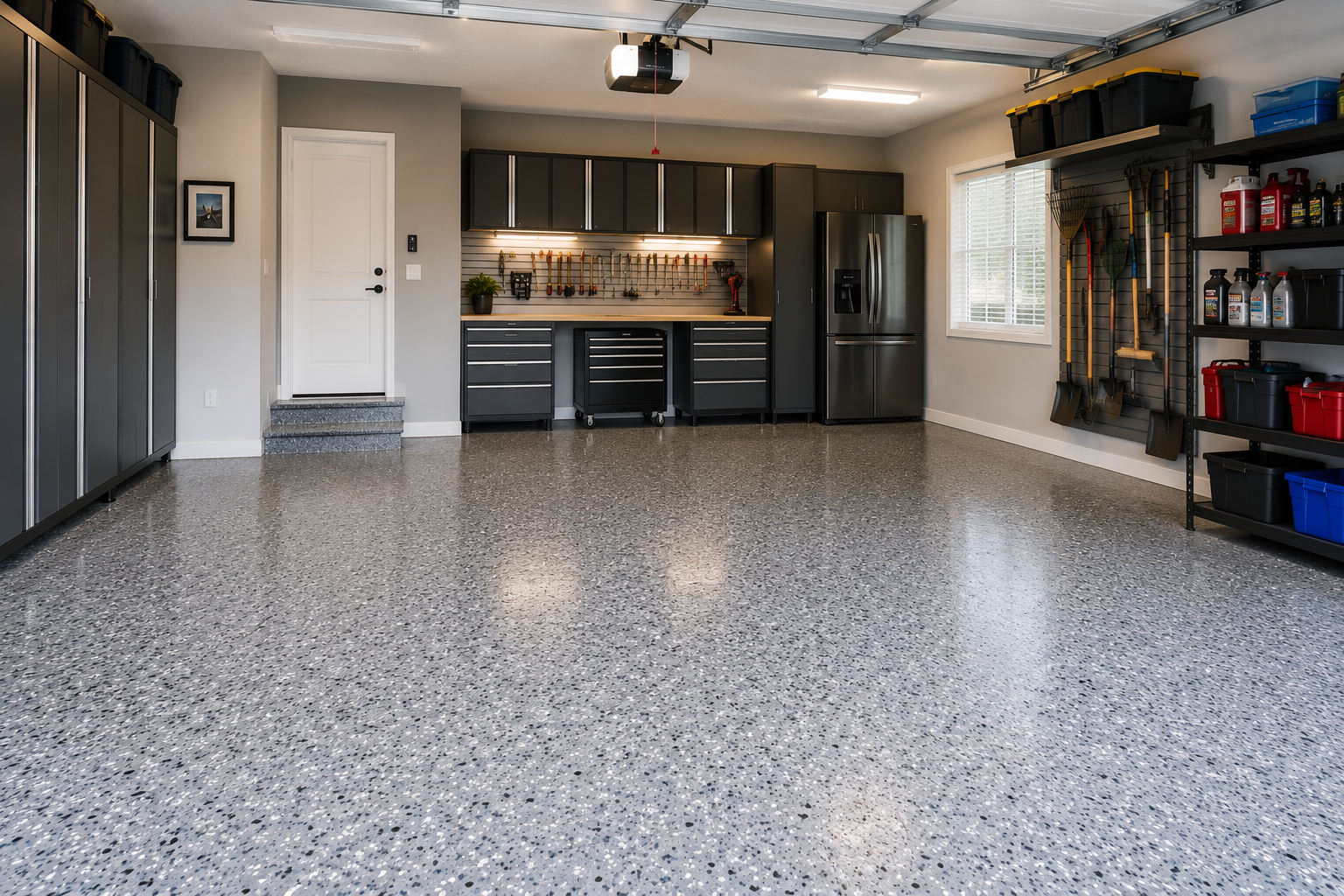
A grind and seal concrete floor takes a different approach.
Instead of hiding the slab beneath an opaque decorative coating, the contractor mechanically grinds the concrete surface using diamond tooling.
Grinding can remove or reduce:
The amount of grinding can also influence the appearance of the finished floor.
After preparation, the concrete is cleaned and a protective sealer is applied.
The finished floor retains the natural variation of concrete while gaining a more refined appearance and protective surface.
No two grind-and-seal floors look exactly alike because no two concrete slabs are identical.
Depending on the concrete and depth of grinding, the finished floor may reveal:
For some homeowners, that variation is exactly what makes grind and seal attractive.
Instead of trying to make concrete look like another flooring material, the process celebrates concrete for what it is.
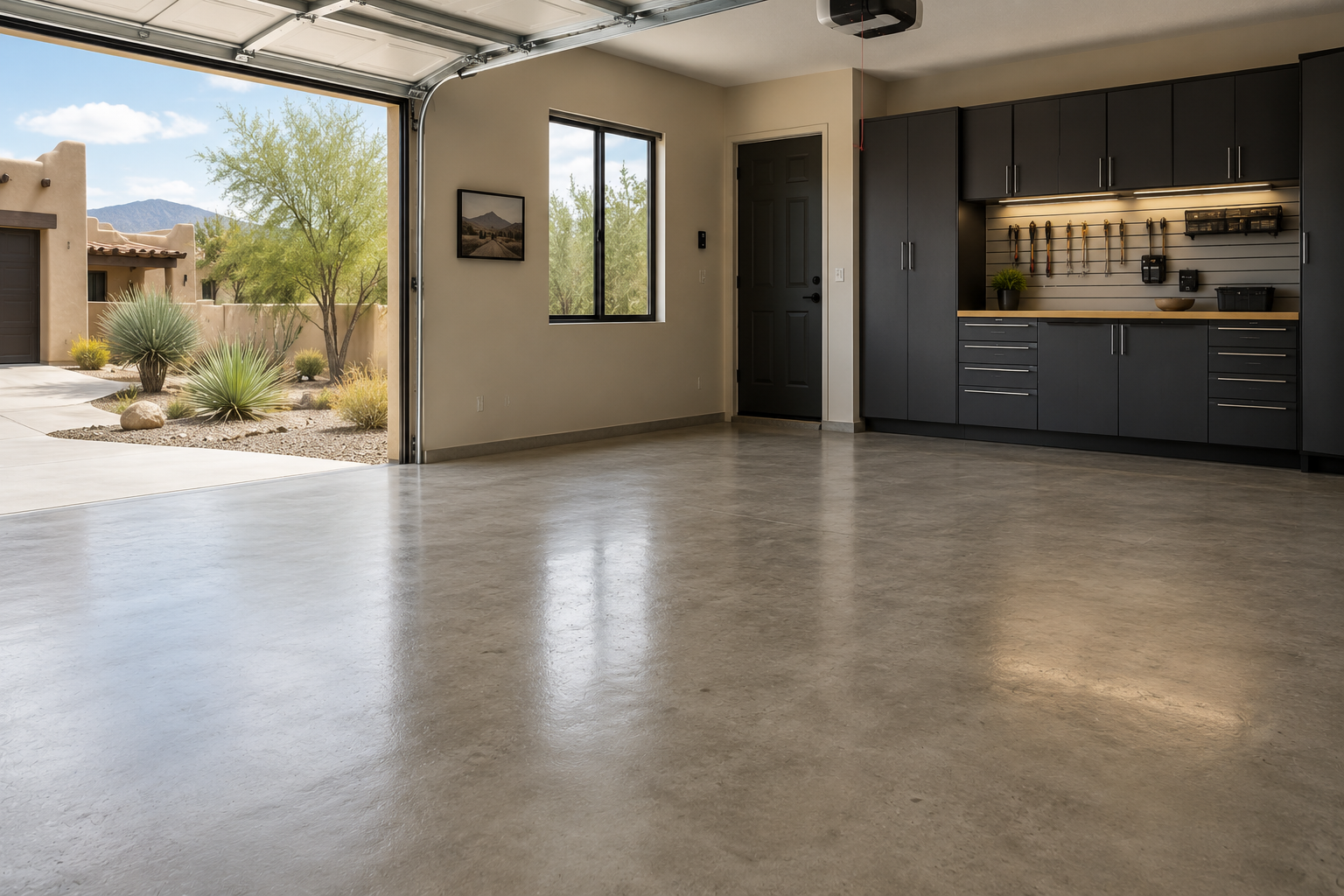
It works particularly well with modern, industrial, minimalist, and contemporary Southwest design.
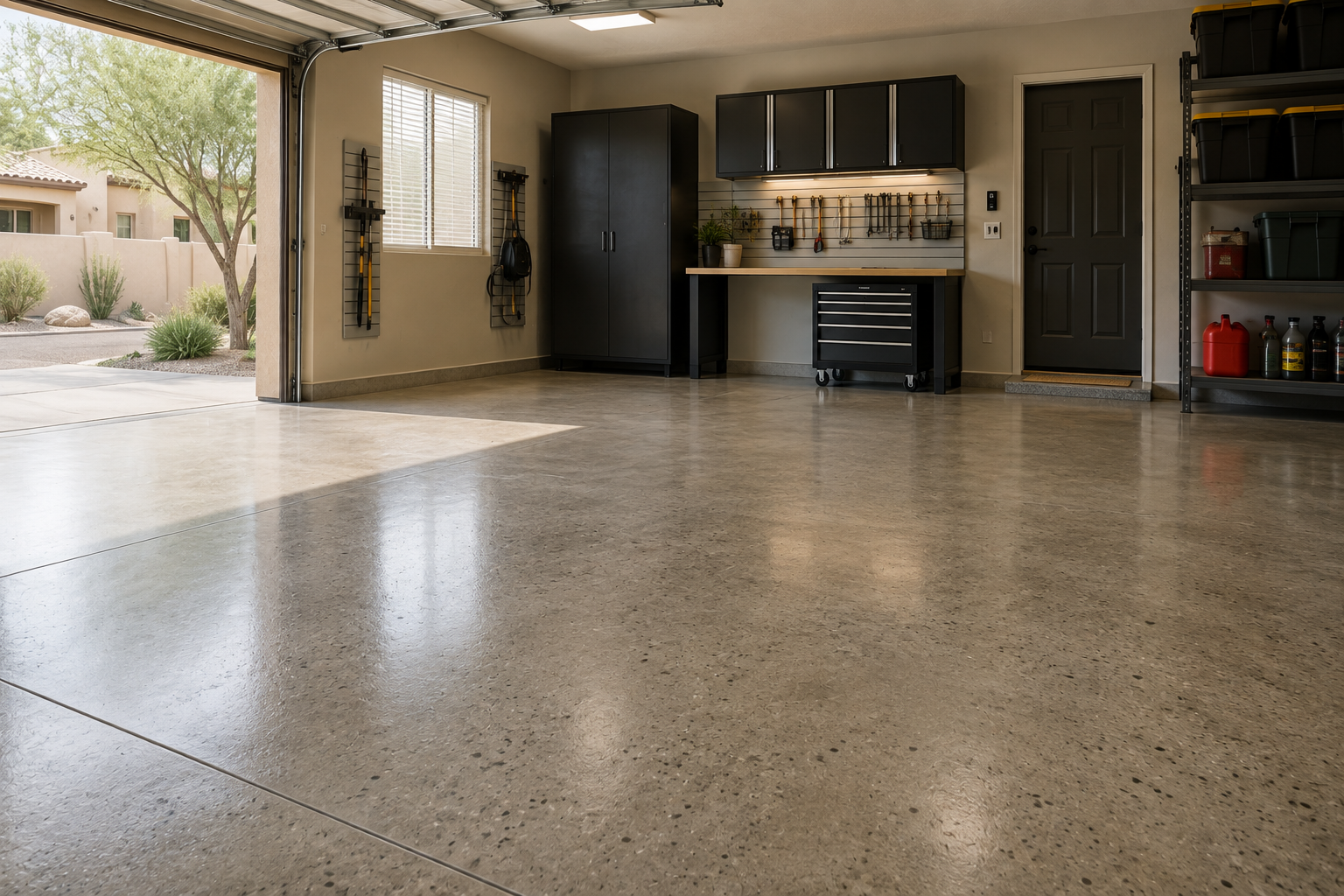
Answer: Choose epoxy if you want a more consistent, customizable appearance. Choose grind and seal if you prefer the natural character of concrete.
Appearance may be the single biggest factor in your decision.
If you want your garage floor to have a specific color or decorative pattern, epoxy gives you significantly more options.
If you appreciate concrete's raw character, a grind-and-seal floor can create a sophisticated architectural appearance.
There isn't a universal winner.
The better floor is the one that fits your home and design goals.
Both systems can provide durable garage floors when the slab is properly prepared and the correct products are used.
However, they handle wear differently.
Quality epoxy flooring systems can stand up well to:
Because the coating sits on top of the concrete, damage to the coating can become visible if the floor is heavily abused.
The quality of surface preparation plays an important role in long-term performance.
Grind and seal uses the concrete itself as the flooring surface, with a sealer providing surface protection.
The system avoids relying on a thick decorative coating to create its appearance.
Over time, the protective sealer may require maintenance or reapplication depending on the product, traffic, and use.
For a typical residential garage, both can provide years of service when professionally installed and maintained.
Answer: Both epoxy and grind-and-seal floors are relatively easy to maintain, although the exact cleaning and resealing requirements depend on the products installed.
Bare garage concrete can create cleaning challenges because its porous surface readily collects dust, dirt, oil, and other contaminants.
Finishing the slab makes routine maintenance much easier.
Typical maintenance may include:
A sealed grind-and-seal floor may eventually require another coat of sealer.
Coated flooring systems can also require maintenance as they age.
The important point is that neither should be viewed as completely maintenance-free.
This is an important consideration for New Mexico homeowners.
Albuquerque's dry environment means garages frequently collect sand, fine dust, and grit tracked inside by vehicles and shoes.
Those particles can act like abrasives when they remain on a floor.
Regular sweeping is therefore important regardless of which garage flooring system you choose.
The good news is that both finished surfaces are considerably easier to sweep and clean than rough, unfinished concrete.
This makes both options practical for garages in Albuquerque and surrounding areas.
For homeowners who regularly work on vehicles, chemical exposure deserves extra consideration.
Properly selected resinous flooring systems can offer strong resistance to many substances commonly encountered in garages. However, chemical resistance varies considerably between products.
Motor oil, gasoline, brake fluid, solvents, and other automotive chemicals should still be cleaned promptly.
Don't assume that every product marketed as "epoxy" has identical chemical resistance.
The specific coating system and topcoat matter.
The same applies to grind-and-seal floors. The chemical and stain resistance will largely depend on the type and quality of sealer used.
If your garage doubles as a serious automotive workspace, tell your concrete flooring contractor exactly how you plan to use it. That allows the flooring system to be selected around real-world exposure rather than appearance alone.
Yes.
This is arguably the greatest advantage of grind and seal.
Instead of creating a layer that hides the slab, grinding reveals the character that is already there.
The finished surface can show subtle aggregate, natural movement, tonal differences, and other details.
This appearance works particularly well in New Mexico homes because it pairs naturally with materials commonly found in Southwestern and desert-inspired design, including:
A warm-toned or naturally gray grind-and-seal floor can feel right at home in Albuquerque architecture.
Yes.
Choosing grind and seal doesn't necessarily mean accepting the existing gray color.
Depending on the project and desired result, stains or dyes may be incorporated to alter the appearance of the concrete.
Possible looks range from subtle earth tones to deeper decorative colors.
However, stained grind-and-seal concrete will still usually have more natural variation than a solid-color coating.
That's part of its appeal.
If you want perfectly uniform color, epoxy is generally the stronger choice.
If you want color while retaining concrete's natural movement and variation, stained grind and seal may be worth considering.
Answer: Epoxy generally provides more control over the final appearance, but neither flooring system can magically correct serious slab problems.
An older garage floor may contain:
A decorative epoxy system can visually cover many surface variations after appropriate preparation and repair.
Grind and seal is more transparent about the slab's history. Repairs and variations can remain visible after grinding.
For homeowners who appreciate an industrial or architectural look, those imperfections may actually add character.
For someone expecting a perfectly uniform floor, they may not.
Minor cracking doesn't necessarily eliminate either option.
The more important question is why the concrete cracked.
A crack that has stopped moving is very different from an active crack caused by slab movement.
Before installing either flooring system, a professional concrete expert should evaluate significant cracks and determine whether repairs are appropriate.
It's also important to have realistic expectations.
Concrete can move.
No decorative flooring system can guarantee that an active crack in the slab will never affect the finished surface above it.
No, and this is an important distinction.
The terms are sometimes used interchangeably online, but grind and seal concrete and mechanically polished concrete are different flooring systems.
Grind and seal involves mechanically grinding the surface and then applying a topical sealer.
True polished concrete uses progressively finer diamond tooling to mechanically refine the concrete. Depending on the system, densifiers are also used during the polishing process.
The final shine in polished concrete primarily comes from mechanically refining the slab.
With grind and seal, much of the finished appearance and protection comes from the topical sealer.
That distinction is important when comparing estimates from concrete contractors.
Epoxy is a type of resinous floor coating, but not every garage floor coating is epoxy.
Other systems may use materials such as polyaspartic, polyurethane, or combinations of different resin technologies.
That's why homeowners searching for the best garage floor coating in Albuquerque shouldn't make their decision based on the word "epoxy" alone.
Ask what complete system is being installed.
That includes the base material, preparation method, decorative layer, and topcoat.
The answer depends on what kind of work happens there.
If you're building a clean woodworking shop, home gym, hobby area, or multipurpose garage, either system can work well.
For an automotive workshop where fluids, tools, floor jacks, and equipment are frequently used, product selection becomes more important.
You should discuss:
with your installer before choosing a system.
The most attractive floor isn't necessarily the best floor if it doesn't match how you use the garage.
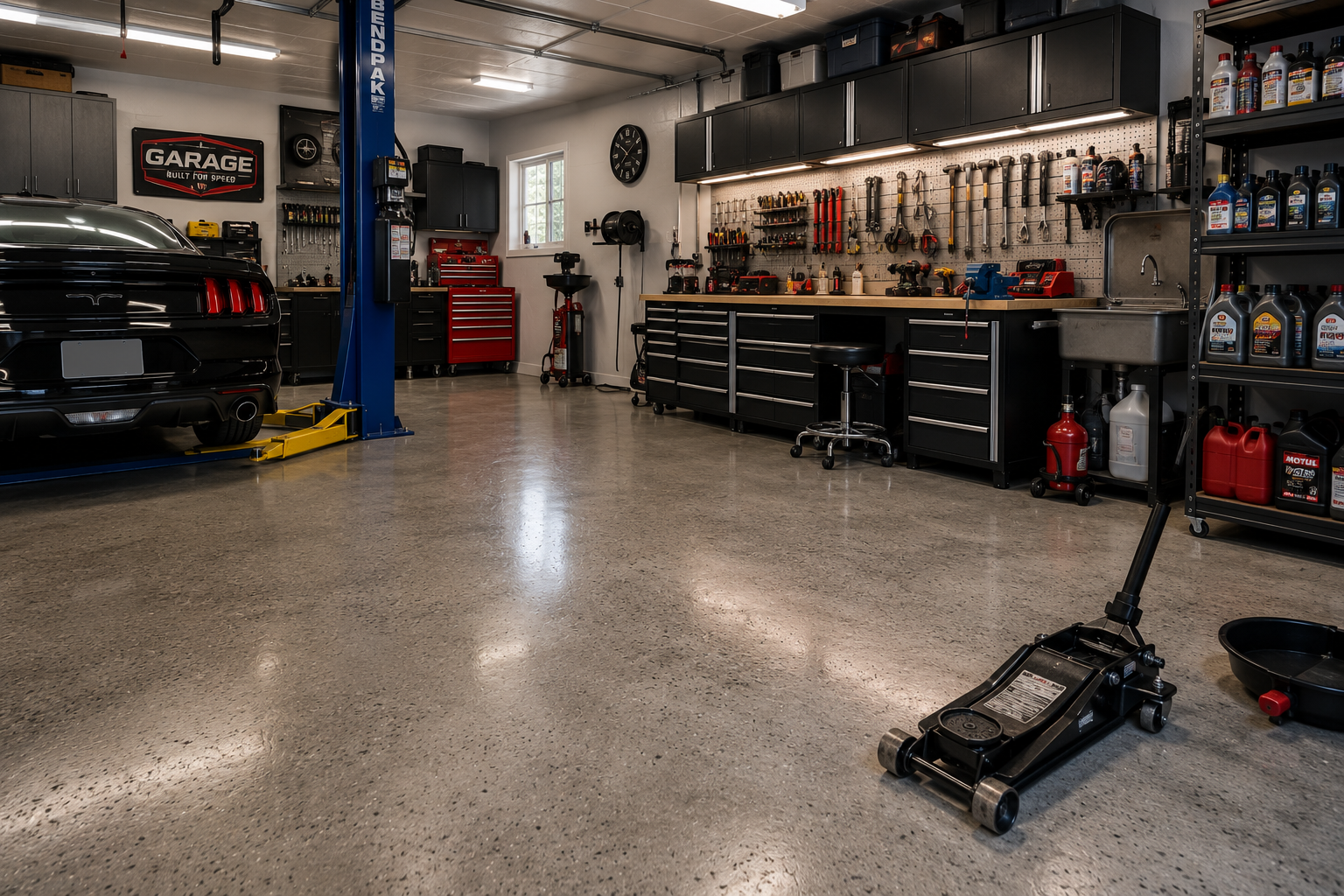
This comes down almost entirely to style.
For a luxury garage with finished walls, cabinetry, lighting, and high-end vehicles, a decorative resinous floor can create a dramatic showroom appearance.
A grind-and-seal floor creates a different kind of luxury.
It is understated, architectural, and material-focused. Rather than drawing attention to a decorative coating, it highlights the natural concrete.
A contemporary custom home may look better with grind and seal.
A highly finished automotive showroom-style garage may look better with a decorative coating.
Both can feel premium when executed correctly.
There isn't one meaningful price that applies to every Albuquerque garage.
Pricing depends on variables including:
Be cautious about choosing a contractor based solely on a low advertised square-foot price.
Surface preparation is one of the most important parts of either installation, and skipping preparation can compromise an otherwise good flooring product.
A professional estimate should account for the actual condition of your garage slab.
Value isn't simply the cheapest installation price.
A better question is:
Which floor gives you the appearance and performance you want for the amount you're investing?
If you want decorative flakes and a highly uniform floor, paying for grind and seal wouldn't make sense just because the quote was lower.
Likewise, if you love exposed concrete, spending more to completely cover it with a decorative coating wouldn't necessarily provide greater value.
Think about the floor you'll want to look at five or ten years from now.
That perspective usually makes the decision easier.
Epoxy and related resinous systems offer extensive customization, strong visual uniformity, easy-to-clean surfaces, and the ability to create a highly finished garage.
They can be especially attractive for homeowners who want the garage to look more like an interior room or automotive showroom.
Performance depends heavily on surface preparation and product quality. Coatings can also show damage differently from exposed concrete, and some decorative systems can hide the natural character of a slab that homeowners may prefer.
Grind and seal preserves the natural character of concrete while creating a more finished appearance. It is relatively easy to maintain, works with many architectural styles, and can be customized through grinding depth, stain, and sealer selection.
Natural concrete variation remains visible. Repairs, aggregate exposure, and color differences may be part of the finished appearance.
The topical sealer will also eventually require maintenance depending on traffic and product selection.
Ask yourself these five questions:
There is no single best garage floor coating for every Albuquerque home.
Epoxy is a great option when you want a decorative, uniform, highly customizable garage floor.
Grind and seal is an excellent alternative when you want to showcase the natural concrete while giving it a refined, protected finish.
The quality of the installation matters just as much as the material you select.
Proper grinding, preparation, repairs, product selection, and application all contribute to how the floor looks and performs.
If you're comparing epoxy vs grind and seal for your garage, High Desert Concrete Design can help you determine which finish makes the most sense for your concrete, home, and design goals.
Our team specializes in decorative concrete flooring for residential and commercial properties throughout Albuquerque, New Mexico. Instead of forcing every garage into the same flooring system, we can evaluate the existing slab and help you explore the finish that fits the way you actually use your space.
Whether you're interested in a decorative garage floor coating or the natural architectural appearance of grind-and-seal concrete, contact High Desert Concrete Design to discuss your project and request an estimate.
If you want to learn more about our services and floors or request a FREE estimate, you can contact us on one of the below methods.


.png)
High Desert Concrete Design Albuquerque, an XPS trained and certified installer, offers premium epoxy flooring solutions for commercial, residential, and industrial properties at budget-friendly prices.